
Your roadmap
Step by step to your first data job
One roadmap, three target roles, and three bonus roles. Find where you are now, pick your target, and start from the right module.
Step 1
Complete your onboarding
Introduce yourself, join the community, and set up your workspace.
Step 2
Understand how the roadmap works
-
One default roadmap. Module 0 to Module 12. It starts with fundamentals and moves to advanced topics. Every module builds on the one before.
-
Everyone starts with Module 0 and Module 1. Module 0 sets up your technical environment. Module 1 explains the data roles, the processes in data teams, and how this roadmap works. Do both, whatever your target role.
-
Skim every module, even as a Data Engineer. Modules are not mandatory, but open each one and check the topics. If you already know a topic, mark it done and move on. Do not skip a module without looking.
-
Your start point depends on you. Three things decide where to go deep: where you are now, your target role, and your target country. Tools and hiring differ by region.
-
Job search starts after Module 1. Dedicated steps for resume, LinkedIn, mock interviews, and applying. You decide when you are ready to apply.
-
Practice along the way. Pet projects, workshops, and mock interviews are part of the roadmap. Module 1 videos explain all of this in detail.
The full write-up is in the blog post Ultimate Data Analytics Career Roadmap .
Group 1
No data experience yet
You want your first data job. Follow the Data Analyst roadmap from Module 0.
Start at Module 0, do every module in order →
Group 2
Already an analyst
You have SQL and BI skills. Move toward an engineering role with the Analytics Engineer roadmap.
Do Modules 0-1, skim 2-3, go deep from Module 4 →
Group 3
In data, want higher pay
You already work with data. Go deep on infrastructure and pipelines with the Data Engineer roadmap.
Do Modules 0-1, skim 2-6, go deep from Module 7 →
Road Map 1
Data Analyst / BI Developer
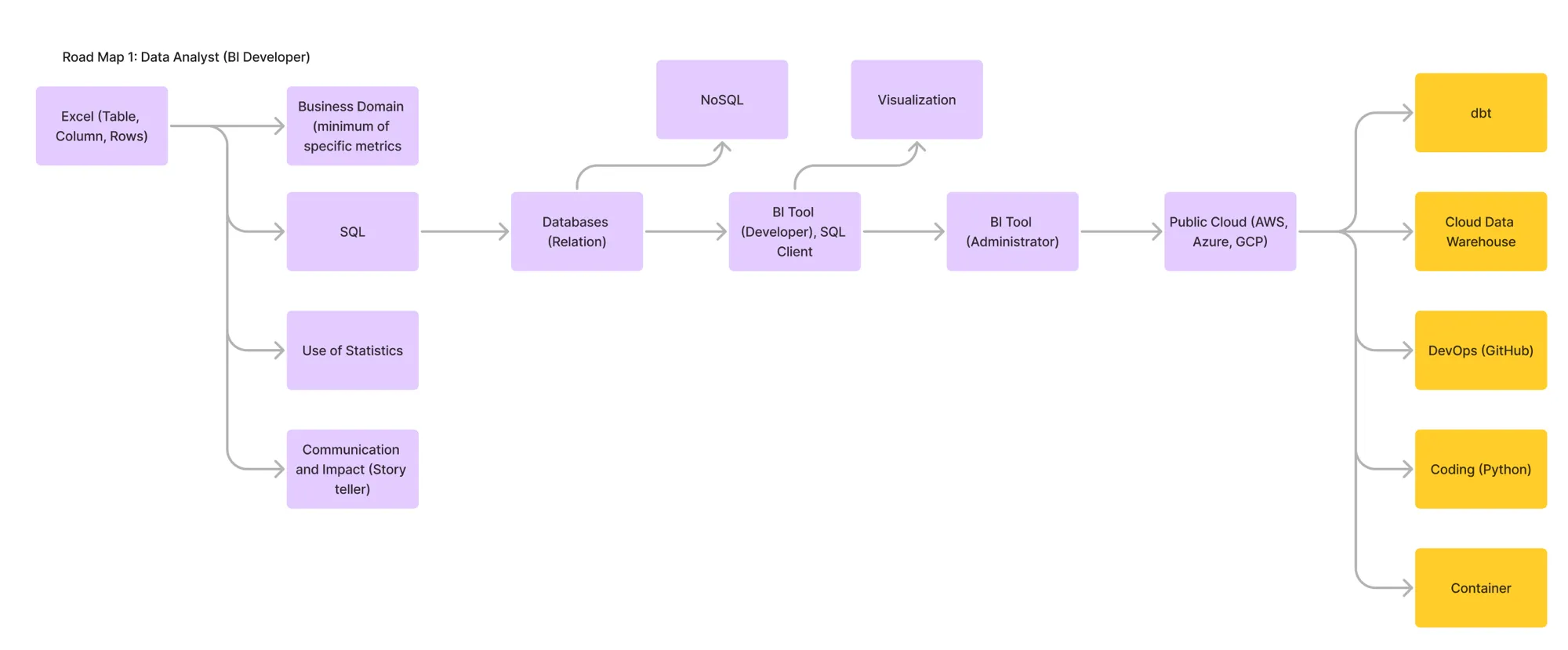
The simplest way to start in data. You need common sense and basic spreadsheet skills. No special degree.
Order matters: SQL first, then business domain, communication, databases, one BI tool, one public cloud. Statistics is optional.
Usually 3-4 months to learn the skills. Then apply. Expect to fail the first interviews. That is how you find your gaps.
Road Map 2
Analytics Engineer
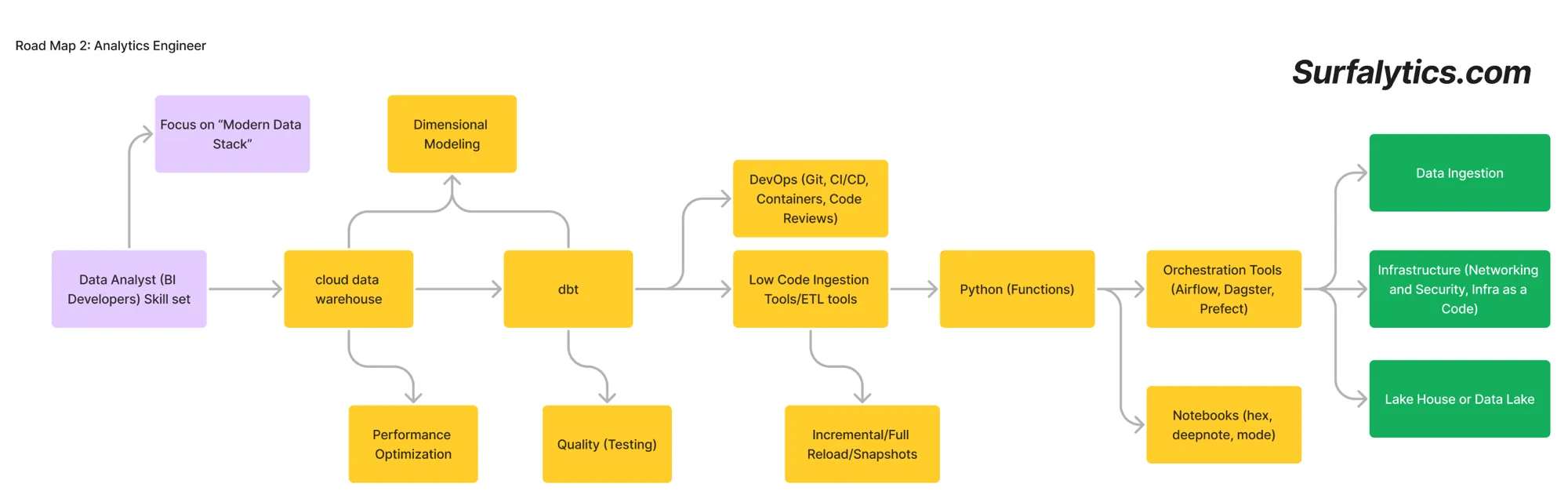
The bridge between BI Developer and Data Engineer. Focus on "Analytics as Code" and the Modern Data Stack.
Requires Data Analyst skills first. Then: one cloud data warehouse, data modeling, dbt, Git and CI/CD, ingestion tools, Python.
Start with Modules 0 and 1 like everyone else. Skim Modules 2 and 3. Go deep from Module 4.
A good move after about one year in analytics. It gives you a technical role and better job security.
Road Map 3
Data Engineer
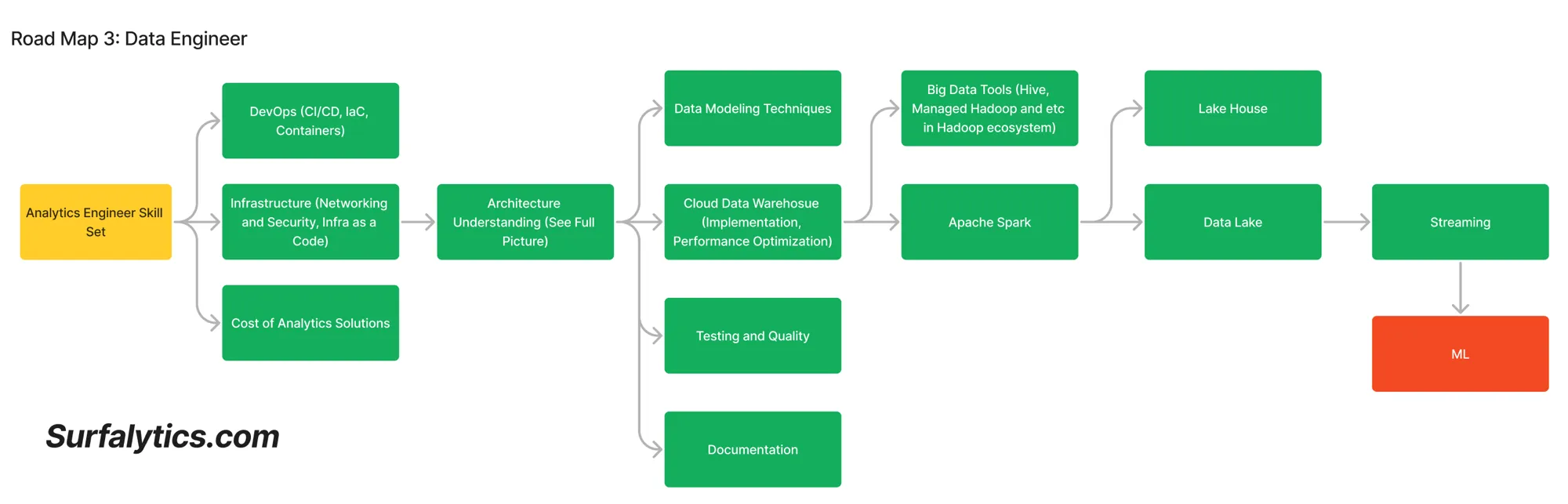
Requires Data Analyst and Analytics Engineer skills. You turn business requirements into secure, scalable pipelines.
New skills: DevOps and infrastructure, cost of solutions, architecture, Apache Spark, data lake and lakehouse, streaming.
Start with Modules 0 and 1 like everyone else. Skim Modules 2 to 6 and mark what you already know. Go deep from Module 7.
From here you can grow to Staff engineer, people manager, or work closer with ML teams.
Road Maps 4-6
Bonus roles
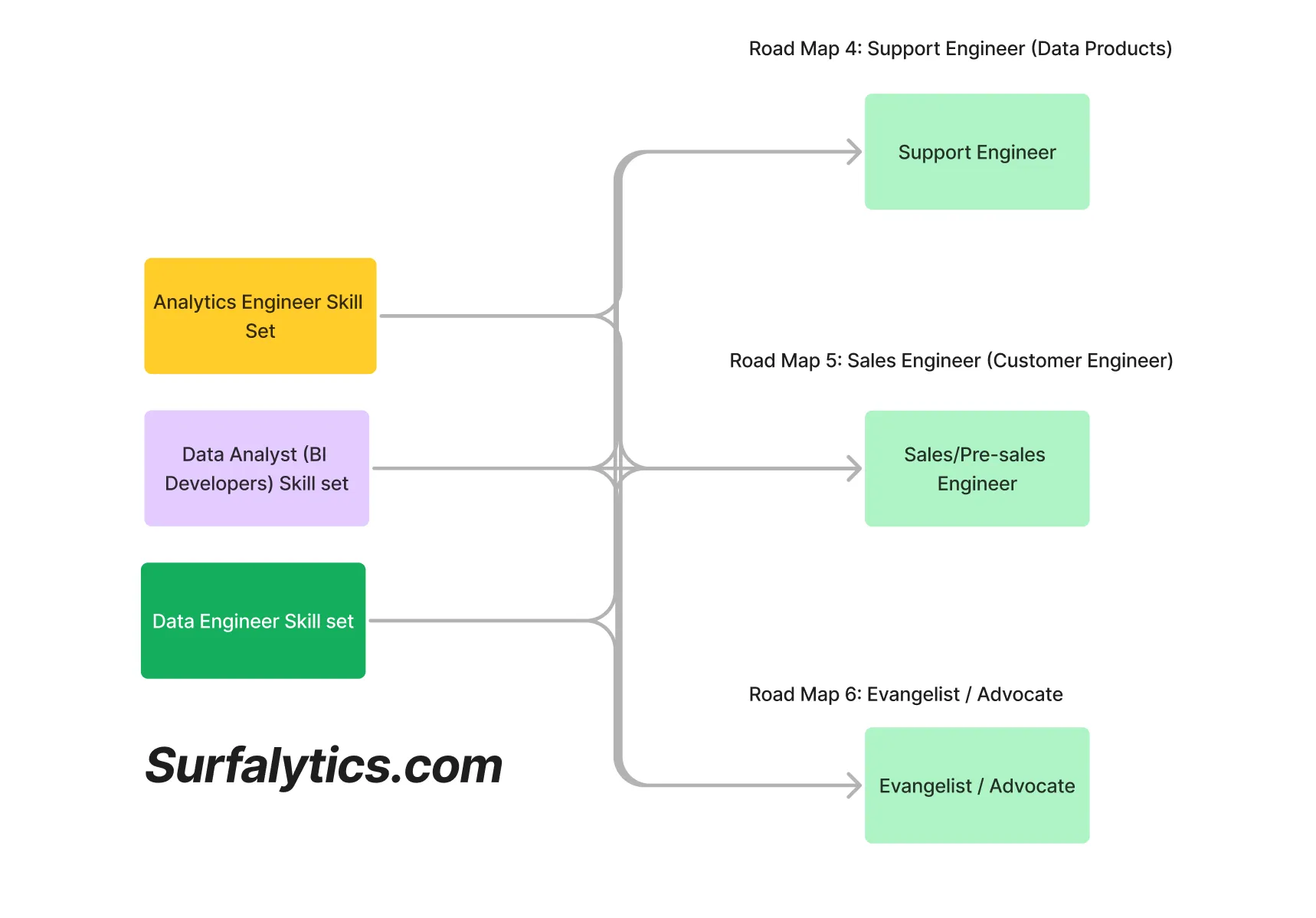
Data skills open more doors than analyst and engineer jobs. These roles build on any of the three skill sets above. Soft skills matter more here.
Support Engineer
Fix data tools when they break. Ticket-based work with SLAs, no project deadlines. Lots of time to learn new features. High impact on customers.
Sales / Pre-sales Engineer
The technical partner of the sales team. Demos, proofs of concept, deep technical questions. Some travel. No long implementation projects.
Evangelist / Developer Advocate
Build data communities, present at conferences, write blog posts. Needs active community involvement and strong vendor relationships.
Modules that cover this
Module 12: Best Practices, DevOps & Soft Skills