
Lesson 02
Cloud Jobs and Certifications
Plan your cloud career: AWS, Azure, and GCP certification paths, learning resources, and skill requirements for cloud data jobs.
Cloud Jobs and Certifications
Why cloud skills matter, what each data role needs, and how to use AWS, Azure and GCP certification tracks for learning.
Learn the skill, skip the exam
This lesson goes straight to what you can study. Vendors (AWS, Microsoft, Google) make the best trainings, so use their certification tracks as a curriculum. You don’t need to pass the exam.
Technology moves so fast that there is no point where you have learned enough. Keep a growth mindset (a Microsoft performance-review idea): learning is part of the job. A career is a marathon, not a sprint, and learning is the fuel. Today that includes AI.
If you already work with the cloud, skim this module. If you are new, especially from a country where AWS, Azure or GCP are rarely used, spend real time on it.
Why cloud for analytics?
- 99% of analytics solutions in North America, Europe and Asia-Pacific are built on a public cloud: AWS, Azure or GCP. Nobody asks if you know it, they assume you do.
- Cloud skills are what Microsoft Excel was 10–20 years ago: a default skill everyone is expected to have.
- All vendors are similar: fundamentals are the same and many services are managed. Master one, and the rest is easy to pick up.
Which one depends on the company: AWS is common in traditional enterprise and fintech, Microsoft Azure and GCP are also very common.
Data roles and key skills
| Role | What they do in the cloud | Key skills |
|---|---|---|
| Data analyst, BI developer | Don’t build services. Use infrastructure built by data engineers or DevOps, usually with read-only permissions | Navigate the UI and know CLI alternatives (shortcuts); read and write data in the cloud; know the tools for processing, storage and ML/AI; basics of security and networking |
| Data engineer | Build, host, troubleshoot and maintain data infrastructure | Networking and security best practices: VPC/VNet, IAM and permissions, data encryption, secrets management; the available analytics and engineering tools with pros and cons (native, third-party, self-hosted open source); data observability; cost monitoring; building a data platform from scratch (system design); maintaining an existing one and contributing through the UI or code |
- For analysts the CLI is optional but a big advantage. That is why Module 0 covers CLI, Git and Docker: use them from day one.
- Security and networking basics help even analysts. If you can’t connect to a database or an S3 bucket, you know who to ask and what to ask for. An AI assistant can also decode most error messages.
AWS certifications
If you don’t know where to start, start with AWS. Amazon began cloud computing long before Azure and GCP.
Foundational
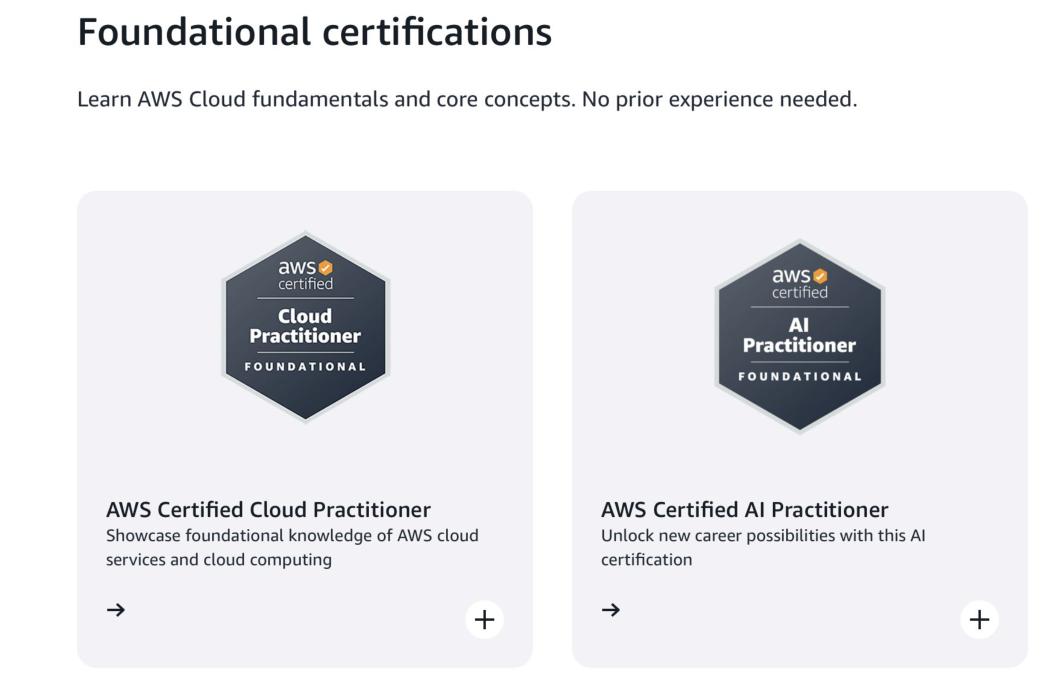
- Cloud Practitioner and the newer AI Practitioner. Very little hands-on, worth a look but optional.
Associate
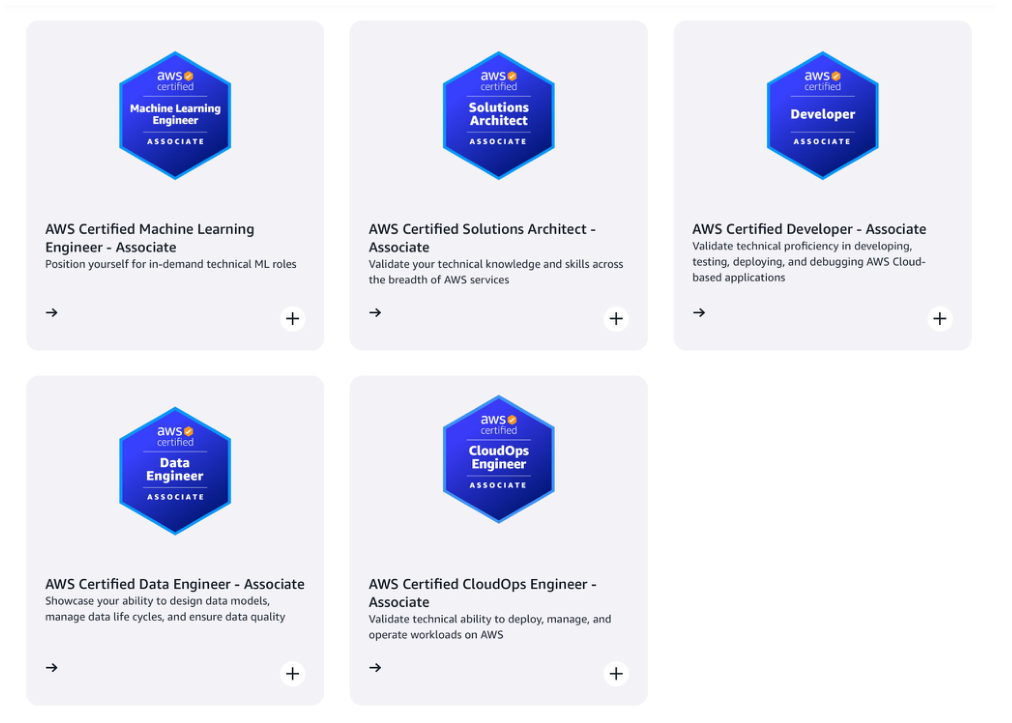
- Solutions Architect: highly recommended. It covers key services, best practices, networking and security, so you touch everything.
- Data Engineer (called Big Data in the past): the next step after Solutions Architect. You learn how to design data engineering systems and which analytics tools AWS offers.
- Also available: Machine Learning Engineer, Developer, CloudOps Engineer, plus professional and specialty levels.
A good plan: Solutions Architect training, then Data Engineer training.
How to prepare
| Resource | Notes |
|---|---|
| AWS trainings | Expensive |
| Pluralsight, Udemy, Coursera | Cheap |
| AWS exam prep books | Very good |
| Quick labs (Qwiklabs) | Hands-on as a service |
| AWS Free Tier | You don’t need anything else to start using AWS |
Azure certifications
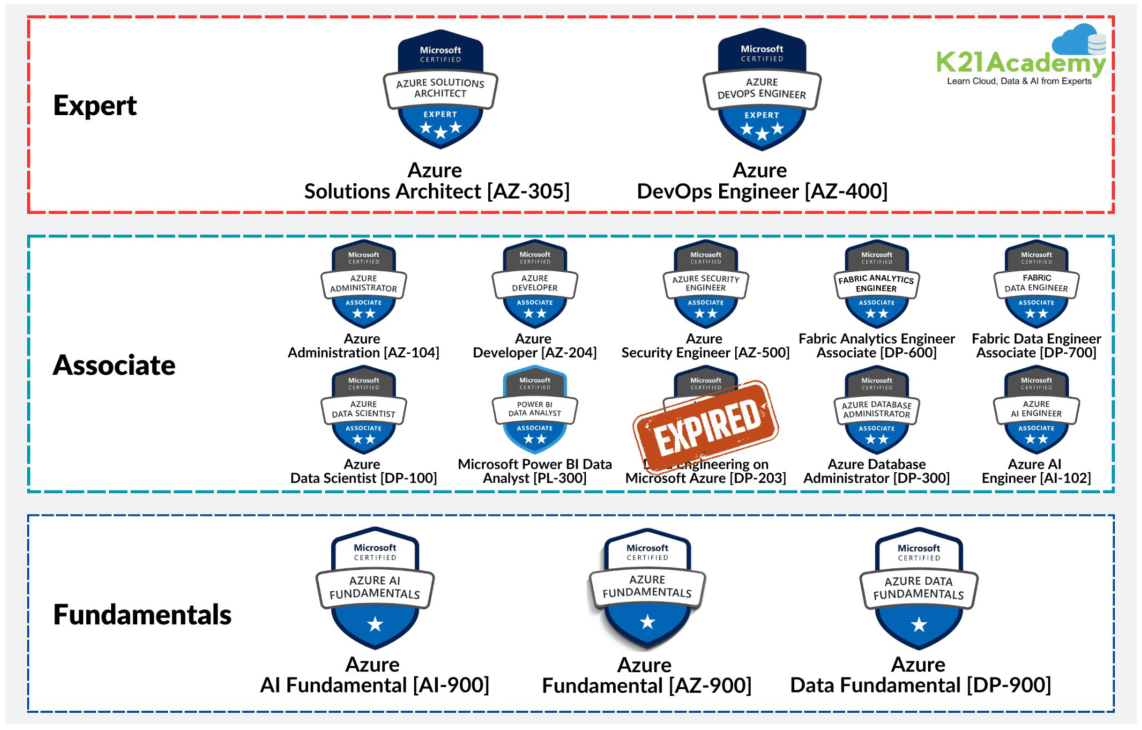
- Fundamentals: AI Fundamentals (AI-900), Azure Fundamentals (AZ-900), Data Fundamentals (DP-900). Easy, and they show you which services exist.
- Associate: for data you mostly need the Data Engineer one. There are also Power BI exams.
- Resources: free Microsoft docs and tutorials, official Microsoft trainings, Pluralsight, Udemy, Coursera.
Google Cloud certifications
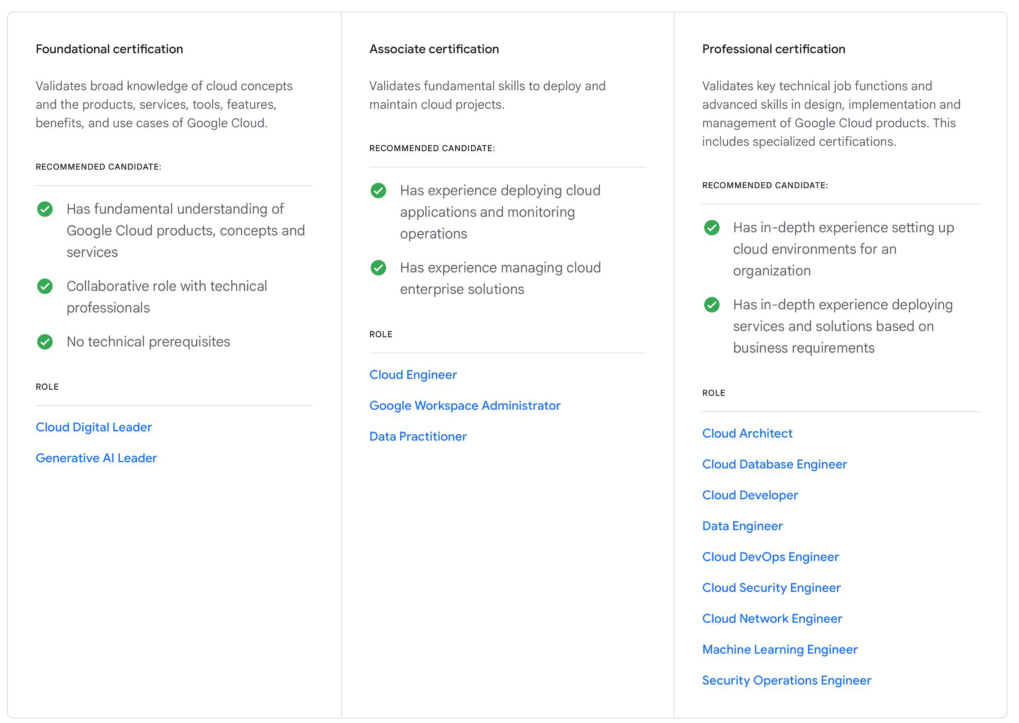
Same three levels: foundational, associate, professional. You can skip foundational and go straight to associate.
Resources: Udemy course by Dan Sullivan (probably the best), GCP exam prep books, the Coursera Google track, Qwiklabs.
Pick one cloud
You don’t need all three. Focus on one and practice it.
- Treat cloud as a side track next to SQL, pet projects, Python, Git and Docker. Learn a bit every day, in parallel with the main modules (databases, BI, ETL).
- Master SQL first, then Python. You can do both, but master each tool before adding the next.
- Pet projects close to production are built on AWS or GCP, so you need to be comfortable with their services.
- Surfalytics recommends everyone start with the AWS trainings and specialization, though your own choice also works.
Do you need the actual certificate?
No.
- Nobody checks whether you have it, and it is easy to fake. The author failed the AWS Solution Architect exam after finishing all the trainings, still put it on the resume, and nobody ever asked.
- Exams reward memorizing details you will never use. The value is in the learning, not the paper.
- There is no correlation between the number of certificates and pay or promotion. One example: a person with 100+ certificates in a low-paid government analyst job.
- When certificates are required: consulting companies (such as Deloitte or Slalom), which need certified staff to be an official AWS partner.
Take the trainings and build things. Skip the exam unless your employer requires it.
Next steps
Next lessons cover cloud fundamentals, models and concepts, security, data in the cloud, and solution architecture. This lesson has no hands-on: it is an overview of what to learn and where.
This lesson is for members only
Join Surfalytics to unlock all 7 lessons in this module, plus every module, project, mock interview, and the private community.
7-day free trial · Cancel any time